
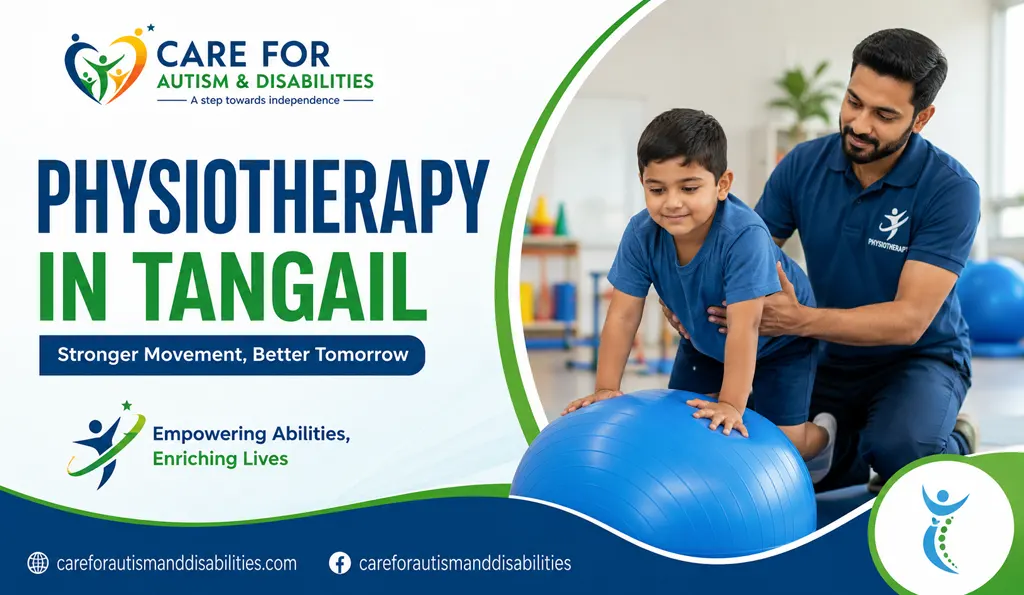
Physiotherapy in Tangail: Services, Benefits & What to Expect
Physiotherapy is a health discipline focused on restoring, maintaining, and maximizing movement, physical strength, balance, and overall mobility. Families and individuals searching for physiotherapy in Tangail often do so to address gross motor delays, post-injury recovery, postural concerns, or physical coordination challenges. In Tangail, Bangladesh, Care for Autism & Disabilities (CAD) offers professional Physiotherapy alongside Speech and Language Therapy and Occupational Therapy, delivering multidisciplinary support for individuals with developmental and physical needs.
What Is Physiotherapy?
Physiotherapy (also known as physical therapy) uses physical approaches, movement evaluation, and targeted therapeutic exercises to enhance functional independence and physical health. Rather than relying solely on passive care, physiotherapy actively engages individuals to build muscle strength, improve joint mobility, and refine body coordination.
Depending on an individual’s specific needs, a qualified physiotherapist evaluates how muscles, joints, nerves, and movement patterns work together. Key areas addressed include:
- Gross Motor Skills: Movements involving large muscle groups, such as standing, walking, running, and jumping.
- Balance and Coordination: Navigating space safely with postural stability and controlled movement.
- Mobility and Strength: Building physical endurance and joint flexibility for daily activities.
- Functional Independence: Supporting the physical skills necessary to participate in school, work, or home life.
Physiotherapy goals are established following a comprehensive clinical evaluation. Interventions are personalized to fit the individual’s baseline capabilities, developmental stage, and physical objectives.
Who May Benefit From Physiotherapy?
Physiotherapy is beneficial across different age groups when physical movement, balance, or motor function is impaired. Consideration for physiotherapy may arise in scenarios involving:
- Gross Motor Delays: Children who take longer to achieve physical milestones such as sitting, crawling, or walking.
- Coordination and Balance Difficulties: Frequent tripping, unstable gait, or difficulty maintaining balance during play.
- Reduced Muscle Tone: Muscle weakness or stiffness affecting posture and movement efficiency.
- Physical Disabilities: Neurological or physical conditions that impact mobility and motor planning.
- Injury Recovery: Rehabilitation following physical trauma, joint sprains, or bone fractures.
In pediatric care, physiotherapy focuses on making movement exercises engaging and developmentally appropriate, encouraging children to build confidence while expanding their physical capabilities.
Physiotherapy for Children in Tangail
Children experience rapid physical growth, making early physical support particularly effective when motor delays or mobility concerns are identified. Physiotherapy for children in Tangail helps young individuals build foundational physical skills needed for everyday exploration, school participation, and social play.
Children require a different approach than adults. Pediatric physiotherapy incorporates play-based activities, structured movement games, and safe exercise routines designed to foster:
- Movement Confidence: Helping children feel secure while running, climbing stairs, or navigating uneven ground.
- Postural Alignment: Encouraging healthy sitting and standing posture during daily tasks.
- Symmetrical Body Use: Ensuring both sides of the body build strength and coordination equally.
Pediatric Physiotherapy: What Does It Focus On?
Pediatric physiotherapy targets specific movement systems to support a child’s overall physical development.
Is Physiotherapy useful for children?
Yes. Pediatric physiotherapy helps children build gross motor skills, balance, strength, and coordination. It supports those experiencing physical developmental delays, muscle weakness, or mobility challenges, helping them participate safely in everyday routines and play.
Core focus areas include:
- Gross Motor Milestone Progression: Assisting infants and toddlers in achieving natural movement benchmarks such as rolling, crawling, sitting upright, and walking.
- Balance and Spatial Stability: Utilizing balance boards, obstacle courses, and stability exercises to reduce falls and improve spatial awareness.
- Strength and Muscle Endurance: Building core, leg, and arm strength to enable active participation in childhood activities.
- Functional Gait and Mobility Training: Improving walking posture, step symmetry, and stride stability.
Physiotherapy and Autism
Autism Spectrum Disorder (ASD) is a neurodevelopmental condition primarily characterized by unique patterns of social interaction, communication, and sensory processing. Autism itself is not a physical motor condition, and physiotherapy is not a “cure” for autism nor a core treatment for neurodivergence.
Does every autistic child need Physiotherapy?
No. Physiotherapy is only recommended for an autistic child if they demonstrate co-occurring physical movement delays, low muscle tone, balance issues, or gross motor coordination challenges. It is assigned based on individual physical needs.
However, some autistic children experience co-occurring motor differences, such as:
- Low muscle tone (hypotonia)
- Postural instability or awkward walking gait
- Challenges with motor planning (dyspraxia)
- Difficulties with coordination, catching, or jumping
When these specific physical needs exist, physiotherapy supports gross motor development, balance, and body awareness, helping the child move more comfortably and safely in their environment.
Common Goals of Physiotherapy
Therapeutic interventions are designed around specific functional outcomes:
| Goal | How Physiotherapy May Help |
|---|---|
| Mobility | Enhances stride stability, walking efficiency, and functional movement. |
| Balance | Develops core control and postural stability to prevent falls. |
| Strength | Builds muscle endurance in legs, arms, and core for daily tasks. |
| Coordination | Improves motor planning for complex physical movements like climbing or kicking. |
| Gross Motor Skills | Supports age-appropriate physical milestones in developing children. |
| Posture | Encourages functional body alignment during sitting, standing, and playing. |
| Physical Independence | Fosters self-reliance in navigating home, school, and community environments. |
Benefits of Physiotherapy
Engaging in a structured, professional physiotherapy plan provides physical and practical benefits:
- Improved Movement Efficiency: Helps individuals move with less effort and greater control.
- Enhanced Physical Safety: Better balance and coordination reduce the risk of trips, falls, and injuries.
- Greater Physical Confidence: Mastery over physical movement encourages participation in recreational and social activities.
- Support for Overall Development: For children, physical mobility often encourages broader environmental exploration and social play.
- Caregiver Guidance: Equirms parents and families with safe positioning and exercise routines to practice at home.
Note: Individual outcomes depend on baseline physical health, consistency of sessions, and the underlying medical or developmental context.
What Happens During a Physiotherapy Assessment?
Before starting therapy, a qualified physiotherapist conducts an initial assessment to understand the individual’s movement profile. While exact procedures vary by age and condition, a standard assessment includes:
Step 1: Clinical Discussion ➔ Step 2: Physical Evaluation ➔ Step 3: Goal Formulation ➔ Step 4: Tailored Plan ➔ Step 5: Ongoing Review
- Clinical Discussion: Reviewing medical history, developmental milestones, birth history (for children), and current daily physical challenges.
- Physical Evaluation: Observing how the individual moves, sits, walks, stands, and navigates obstacles. The therapist may evaluate muscle strength, joint range of motion, balance, and posture.
- Goal Formulation: Establishing clear, measurable objectives (e.g., walking independently across a room, standing without support, or improving staircase navigation).
- Tailored Therapy Plan: Designing a clinical session schedule alongside supportive activities for home practice.
- Ongoing Review: Periodically evaluating progress and adjusting exercise intensity as physical capabilities improve.
Physiotherapy for Children With Developmental Needs
Children with developmental differences may present with varied motor profiles. Some children have strong physical mobility but need help with speech or fine motor control, whereas others experience delays across multiple developmental domains.
Physiotherapy addresses specific physical needs by:
- Helping children with low muscle tone build core stability for upright sitting.
- Assisting children with movement rigidity in expanding their joint range of motion.
- Guiding children with coordination challenges through structured, multi-step movement tasks.
A professional physical evaluation determines whether physiotherapy is necessary or whether support should focus on other disciplines, such as speech or occupational therapy.
Physiotherapy vs. Occupational Therapy vs. Speech Therapy
Understanding the distinctions among allied health therapies helps families select the right care:
| Therapy | Main Focus | Examples of Support |
|---|---|---|
| Physiotherapy | Gross motor skills, physical mobility, posture, and balance | Walking gait, leg strength, core stability, jumping, and physical endurance |
| Occupational Therapy | Fine motor control, daily living activities, and sensory processing | Hand grip, buttoning clothes, self-feeding, sensory integration, and writing |
| Speech & Language Therapy | Receptive/expressive communication and social speech | Speech clarity, vocabulary building, non-verbal communication, and sentence structure |
Occupational Therapy in Tangail
For children needing assistance with daily living routines, fine motor tasks, or sensory integration, Occupational Therapy (OT) provides targeted support. Care for Autism & Disabilities (CAD) offers Occupational Therapy in Tangail alongside its physical and speech services, addressing areas such as hand-eye coordination, self-care routines, and sensory regulation.
Speech and Language Therapy in Tangail
Communication is central to a child’s social and cognitive growth. Speech and Language Therapy in Tangail at CAD supports children in expressing their needs, understanding spoken language, and developing functional social communication skills through personalized, evidence-informed sessions.
How to Choose a Physiotherapy Center in Tangail
Selecting an appropriate provider is critical for safety and care quality. Use this checklist when evaluating physiotherapy services in Tangail:
- Check Professional Credentials: Verify that therapists hold formal degrees in physiotherapy from recognized universities.
- Ensure Individualized Assessments: Confirm that the center performs a detailed initial assessment rather than assigning generic exercise plans.
- Verify Clear Goal Setting: Ask how functional goals are determined and how progress is objectively measured.
- Inspect Clinical Facilities: Ensure therapy rooms are clean, well-lit, safe, and equipped with age-appropriate physical therapy tools.
- Evaluate Family Communication: Choose centers where therapists regularly update parents and explain home exercises clearly.
- Look for Multidisciplinary Options: If your child has complex developmental needs, having access to speech and occupational therapies under one roof provides coordinated care.
Questions to Ask Before Starting Physiotherapy
When meeting with a physiotherapist for the first time, consider asking:
- What formal qualifications and clinical experience do you have in physical therapy?
- What specific physical areas will the initial assessment focus on?
- What functional goals do you recommend for my child or family member?
- How frequently should therapy sessions occur?
- How will progress be monitored and reported to our family?
- What physical exercises or safety positioning can we safely practice at home?
- How will therapy sessions adapt if my child becomes tired or uncooperative?
- Would our child benefit from additional developmental evaluations, such as speech or occupational therapy?
Care for Autism & Disabilities (CAD) in Tangail
Care for Autism & Disabilities (CAD) is a specialized therapy facility located in Tangail, Bangladesh. CAD is dedicated to supporting children and individuals with developmental, physical, and communication needs.
The confirmed services provided at CAD include:
- Physiotherapy: Focused on gross motor development, muscle strength, balance, coordination, and posture.
- Speech and Language Therapy: Addressing speech clarity, language comprehension, and functional communication.
- Occupational Therapy: Supporting fine motor control, daily living skills, and sensory integration.
CAD provides individualized therapy plans in a supportive environment, helping families in Tangail access coordinated therapy services under professional guidance.
Why Individualized Physiotherapy Matters
No two individuals share the exact same physical baseline, muscle structure, or developmental path. A standardized exercise program risks being either too challenging or ineffective.
Individualized therapy ensures that exercises match the patient’s current physical capabilities. For young children, personalization allows therapists to adapt sessions around the child’s mood, energy levels, and play preferences, keeping therapy safe, engaging, and productive.
When Should You Consider Professional Physiotherapy Advice?
Consider scheduling a professional physical evaluation if you observe:
- A child taking significantly longer than peers to achieve gross motor milestones (sitting, crawling, walking).
- Frequent falling, tripping, or noticeable balance instability during normal movement.
- Asymmetry in movement, such as favoring one side of the body or dragging one leg.
- Persistent unusual walking posture, such as continuous toe-walking or severe in-toeing.
- Muscle stiffness, joint rigidity, or unusually floppy muscle tone.
- Difficulty climbing stairs or keeping up with peers during physical play.
Consultation with a qualified healthcare or therapy professional helps clarify whether therapy is recommended.
Physiotherapy in Tangail: What Parents Should Expect
Consultation ➔ Assessment ➔ Goal Formulation ➔ Therapy Sessions ➔ Home Practice ➔ Progress Review
- Initial Consultation: Discussing concerns, developmental timeline, and daily activities.
- Physical Assessment: Evaluating motor skills, balance, strength, and posture.
- Goal Setting: Establishing clear, short-term and long-term movement objectives.
- Active Therapy: Engaging in hands-on clinical movement routines and exercises.
- Home Guidance: Learning simple positioning and safety exercises for home practice.
- Progress Review: Re-evaluating capabilities periodically to update goals.
Frequently Asked Questions About Physiotherapy in Tangail
What is Physiotherapy?
Physiotherapy is a healthcare discipline focused on evaluating, restoring, and maintaining physical movement, muscle strength, balance, posture, and mobility through targeted physical exercises and therapeutic techniques.
Who may need Physiotherapy?
Physiotherapy benefits individuals with gross motor delays, mobility limitations, muscle weakness, balance challenges, posture issues, physical disabilities, or those recovering from physical injuries.
Is Physiotherapy useful for children?
Yes. Pediatric physiotherapy supports children with gross motor delays, low muscle tone, balance challenges, and coordination difficulties, helping them build functional physical independence.
Does every autistic child need Physiotherapy?
No. Physiotherapy is only needed if an autistic child also presents with specific physical motor delays, muscle weakness, balance issues, or posture challenges.
Does CAD provide Physiotherapy in Tangail?
Yes. Care for Autism & Disabilities (CAD) provides dedicated Physiotherapy services in Tangail, Bangladesh.
What other therapy services does CAD provide?
Along with Physiotherapy, CAD provides Speech and Language Therapy and Occupational Therapy.
How do I choose a Physiotherapy center in Tangail?
Look for qualified therapists with recognized credentials, thorough assessment protocols, personalized therapy plans, clean facilities, and open communication with families.
How long does Physiotherapy take?
Therapy duration varies based on the individual’s specific needs, underlying condition, consistency of attendance, and personal response to treatment. Plans are reviewed periodically to measure progress.
