
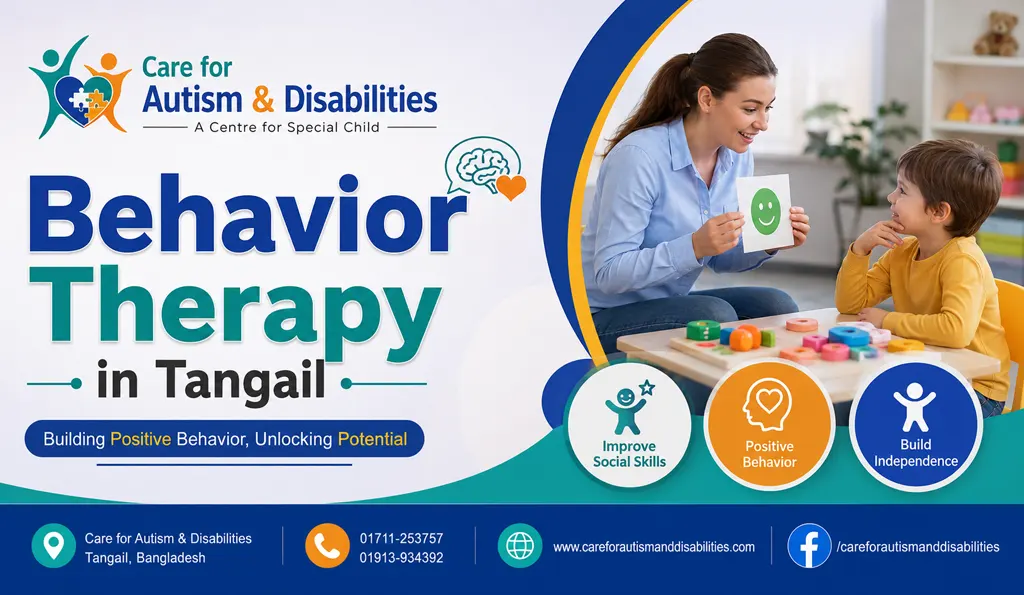
Behavior Therapy in Tangail: A Parent’s Guide to Child Support
Behavior Therapy focuses on understanding a child’s actions, identifying environmental triggers, and building practical skills for daily life. Parents searching for Behavior Therapy in Tangail often look for structured support to help children develop functional communication, emotional regulation, and daily independence. For families exploring comprehensive child development options, local centers such as Care for Autism & Disabilities (CAD) in Tangail, Bangladesh, provide key developmental therapies—including Speech and Language Therapy, Occupational Therapy, and Physiotherapy which frequently complement behavioral support plans.
What Is Behavior Therapy?
Behavior therapy is a structured, evidence-informed framework that helps children acquire positive skills while reducing habits that interfere with learning, safety, or social participation. Rather than viewing behavior as a fixed trait, this approach examines how environmental factors, sensory experiences, and communication barriers shape how a child interacts with the world.
Key elements of behavioral approaches include:
- Identifying Triggers: Understanding what environmental, social, or physiological factors occur before a specific behavior.
- Teaching Replacement Skills: Giving the child alternative ways to express frustration, ask for help, or request a break.
- Reinforcing Practical Skills: Encouraging positive behaviors such as following daily routines, sharing, and self-care.
- Reducing Barriers: Modifying surrounding environments to lower stress, anxiety, and sensory overload.
Behavioral interventions must always be tailored to the individual child. Modern developmental approaches prioritize respecting a child’s dignity, focus on functional communication, and reject any effort to force compliance or eliminate harmless self-regulatory habits.
Who May Benefit From Behavior Therapy?
Behavioral support strategies can benefit children experiencing challenges across various developmental areas. A child does not need a formal diagnosis to benefit from structured skill-building, though support is commonly sought for challenges related to:
- Communication Gaps: Frustration arising from an inability to express immediate needs or feelings.
- Emotional Regulation: Difficulty navigating transitions, unexpected changes, or overwhelming environments.
- Daily Living Skills: Struggles with establishing routines for hygiene, dressing, mealtime, or bedtime.
- Social Interaction: Difficulty understanding turn-taking, cooperative play, or social boundaries.
- Functional Learning: Challenges with focus, following instructions, or classroom readiness skills.
Note: Observing behavioral differences or emotional distress does not automatically mean a child has autism or a neurodevelopmental condition. Comprehensive professional evaluations should always guide therapeutic decisions.
Behavior Therapy and Autism
Autism Spectrum Disorder (ASD) is a neurodevelopmental condition characterized by unique patterns of communication, social interaction, and sensory processing. When behavioral strategies are implemented for autistic children, the goal is not to “fix” autism or erase natural neurodivergent traits.
Featured Snippet Target:
Is Behavior Therapy useful for autistic children?
Yes. Behavioral approaches can help autistic children learn functional life skills, express needs, and navigate daily routines. Effective programs prioritize dignity, communication, and emotional regulation rather than forcing masking or trying to cure autism.
Key principles when applying behavioral approaches for autistic children include:
- Focus on Autonomy: Priorities should centered on functional safety, communication, and independence rather than non-essential social expectations.
- Respecting Sensory Profiles: Understanding that sensory overload often manifests as behavioral distress.
- Individualized Goals: Tailoring strategies to match the child’s strengths, interests, and natural communication style.
Common Goals of Behavior Therapy for Children
When qualified professionals design a behavioral support plan, intervention goals may include:
- Developing Functional Communication: Using speech, signs, or assistive communication tools to express needs effectively.
- Enhancing Daily Routines: Building consistent habits for dressing, eating, personal hygiene, and sleep.
- Supporting Emotional Regulation: Teaching strategies to recognize and manage frustration, anxiety, or sensory distress.
- Improving Social Readiness: Encouraging turn-taking, shared attention, and peer cooperation.
- Fostering Independence: Equipping children with problem-solving skills for home, school, and community settings.
How Does Behavior Therapy Work?
While exact methodologies vary among providers, standard structured behavioral programs generally follow a six-step process:
Step 1: Understanding the Child ➔ Step 2: Identifying Target Skills ➔ Step 3: Individualized Plan ➔ Step 4: Practicing Skills ➔ Step 5: Progress Monitoring ➔ Step 6: Adjusting the Plan
- Understanding the Child: Conducting clinical observations and speaking with parents to learn about the child’s strengths, preferences, routines, and challenges.
- Identifying Target Skills: Selecting meaningful, practical goals that enhance the child’s daily quality of life.
- Developing an Individualized Plan: Creating step-by-step strategies that introduce and reinforce target skills positively.
- Practicing Skills: Teaching skills through play, direct instruction, and real-world routines in supportive environments.
- Monitoring Progress: Tracking objective data to observe skill acquisition over time.
- Adjusting the Plan: Modifying goals and strategies as the child grows, develops new strengths, or faces changing environments.
Why Individualized Behavior Therapy Matters
Children vary widely in learning styles, communication abilities, sensory thresholds, and family environments. A rigid, one-size-fits-all therapy program is ineffective and can cause unnecessary stress for both the child and family.
Personalized assessment ensures therapy aligns with the child’s natural pace. Tailoring strategies to a child’s specific communication methods and interests makes skill acquisition more engaging, leading to meaningful progress across home, school, and community environments.
Behavior Therapy vs. Speech Therapy vs. Occupational Therapy vs. Physiotherapy
Understanding how different therapeutic disciplines operate helps parents build a well-rounded support plan for their child:
| Therapy | Main Focus | Examples of Support |
|---|---|---|
| Behavior Therapy | Functional behavior, skill acquisition, and routine participation | Skill development, positive behavior support, emotional regulation strategies |
| Speech & Language Therapy | Communication, language comprehension, and speech production | Expressive speech, receptive language, social communication, AAC devices |
| Occupational Therapy | Daily living skills, motor planning, and sensory integration | Fine motor control, buttoning clothes, sensory processing, hand-eye coordination |
| Physiotherapy | Physical mobility, gross motor skills, and body strength | Posture alignment, balance, walking efficiency, muscle strength building |
Speech and Language Therapy in Tangail
Communication barriers often contribute directly to behavioral frustration. When children cannot convey their feelings or needs, behavioral distress may occur as a secondary response.
At Care for Autism & Disabilities (CAD) in Tangail, qualified specialists provide dedicated Speech and Language Therapy to address these root communication challenges. Services focus on:
- Building expressive vocabulary and clear speech production.
- Developing alternative or augmentative communication systems for non-verbal children.
- Improving receptive language comprehension so children can understand daily instructions.
- Fostering functional social communication skills for daily interaction.
Occupational Therapy in Tangail
Sensory overload and poor motor coordination can significantly affect a child’s confidence and emotional state. Occupational Therapy (OT) helps children build practical skills for daily living.
Care for Autism & Disabilities (CAD) offers Occupational Therapy services in Tangail targeting:
- Fine Motor Development: Enhancing grip strength for writing, drawing, and handling utensils.
- Sensory Integration: Assisting children in processing auditory, tactile, and visual inputs comfortably.
- Self-Care Independence: Training in dressing, hygiene, and mealtime independence.
- Hand-Eye Coordination: Improving spatial awareness and physical control during everyday tasks.
Physiotherapy in Tangail
For children with physical motor delays or movement coordination difficulties, Physiotherapy offers focused intervention to build gross motor control, mobility, and physical strength.
CAD provides specialized Physiotherapy services in Tangail for children with targeted physical needs. Core focus areas include:
- Strengthening core and limb muscles to improve overall mobility.
- Enhancing physical balance, posture, and body coordination.
- Supporting gross motor milestones such as jumping, climbing, and walking steadily.
Note: Physiotherapy is not required for every autistic child or individual with behavioral needs; it is recommended based on specific physical evaluations.
How to Choose Behavior Therapy in Tangail
Selecting the right provider requires careful evaluation. Use this checklist when considering behavioral support services:
- Check Professional Qualifications: Verify that therapists hold recognized credentials in psychology, special education, or behavioral sciences.
- Confirm Individual Assessment: Ensure the provider conducts thorough initial evaluations before designing goals.
- Evaluate Goal Meaningfulness: Confirm that proposed therapy goals focus on functional skills rather than superficial compliance.
- Review Progress Tracking: Ask how progress is documented and shared with parents transparently.
- Look for Respectful Practices: Observe whether therapists treat the child with empathy, dignity, and patience.
- Ensure Parent Involvement: Verify that parents receive guidance to carry out supportive practices consistently at home.
- Avoid Unrealistic Claims: Avoid providers promising “guaranteed cures,” quick fixes, or fixed recovery timelines.
- Consider Multidisciplinary Care: Determine whether complementary services—such as Speech Therapy, Occupational Therapy, or Physiotherapy—are needed to address overall developmental goals.
Questions Parents Should Ask Before Starting Therapy
When consulting a therapy provider, consider asking:
- What formal qualifications, training, and experience do your therapists possess?
- How will my child’s individual strengths, preferences, and challenges be evaluated?
- What specific, measurable goals will be set for my child?
- How often will progress reviews take place, and how is data shared with parents?
- How do sessions accommodate my child’s communication style and sensory preferences?
- What strategies can our family implement at home to maintain consistency?
- How does your center handle situations when a child becomes overwhelmed or distressed?
- Do you collaborate with other developmental specialists (such as speech or occupational therapists)?
Care for Autism & Disabilities (CAD) in Tangail
Located in Tangail, Bangladesh, Care for Autism & Disabilities (CAD) is a dedicated therapy center focused on supporting children and individuals with developmental and communication needs.
Confirmed therapy services provided at CAD include:
While families may seek behavioral advice across various specialized providers in Tangail, CAD’s multidisciplinary team provides a strong foundation in speech, motor, and daily living skills. Addressing communication barriers and sensory needs at CAD can significantly reduce underlying frustration, contributing positively to a child’s overall behavioral and emotional development.
When Should Parents Seek Professional Guidance?
Parents should consider seeking a professional developmental evaluation if they observe persistent concerns in areas such as:
- Noticeable delays in speech, gesture use, or communication.
- Frequent distress or extreme frustration during ordinary daily routines.
- Persistent difficulty with emotional regulation, adaptability, or managing transitions.
- Sensory sensitivities to textures, sounds, or lighting environments.
- Challenges with physical balance, fine motor tasks, or coordination.
- Significant difficulty interacting or playing cooperatively with peers.
Seeking guidance early provides families with clear strategies to support their child’s ongoing development.
What Parents Can Do at Home
While formal therapies provide structured support, consistent home practice reinforces growth. Safe, general home strategies include:
- Establish Predictable Routines: Use visual schedules or simple picture cues to outline daily activities.
- Use Clear Communication: Keep instructions simple, direct, and matched to the child’s comprehension level.
- Offer Structured Choices: Allow choices between two acceptable options (e.g., “Do you want to wear the blue shirt or the red shirt?”) to encourage autonomy.
- Praise Functional Effort: Recognize and encourage positive communication, patience, and effort.
- Create a Calming Space: Set aside a quiet, low-sensory area at home where your child can relax when feeling overwhelmed.
- Maintain Consistent Expectations: Coordinate strategies with your child’s therapy team to maintain consistency across settings.
Behavior Therapy in Tangail: What Makes a Good Service?
| Quality | Why It Matters |
|---|---|
| Qualified Professionals | Ensures evidence-informed, ethical, and safe therapeutic interventions. |
| Individualized Assessment | Identifies a child’s specific strengths, challenges, and environmental context. |
| Functional Goals | Prioritizes practical life skills, autonomy, and meaningful participation. |
| Transparent Data | Allows parents to track clear, objective skill progress over time. |
| Parent Collaboration | Empowers caregivers to apply supportive routines consistently at home. |
| Respectful Methods | Protects the child’s emotional wellbeing, dignity, and self-esteem. |
| Multidisciplinary Coordination | Integrates speech, occupational, and physical therapies for holistic development. |
Frequently Asked Questions
What is Behavior Therapy?
Behavior Therapy is a structured, skill-focused intervention that helps children learn functional life skills, manage emotional frustration, and adapt to daily routines. It identifies environmental factors and sensory triggers to teach practical, positive behaviors.
Is Behavior Therapy useful for autistic children?
Yes. When implemented ethically, behavioral approaches help autistic children build functional communication, daily living skills, and emotional regulation strategies tailored to their individual needs.
Is Behavior Therapy the same as Speech Therapy?
No. Behavior Therapy focuses on functional routines, skill acquisition, and emotional regulation. Speech Therapy specifically addresses verbal speech, language comprehension, social communication, and alternative communication methods.
Does every autistic child need Behavior Therapy?
No. Therapeutic needs vary widely among autistic individuals. Support should be selected based on a child’s individual strengths, challenges, and specific developmental priorities.
Is Behavior Therapy available in Tangail?
Parents in Tangail can find behavioral support through private practitioners, special education professionals, or regional developmental centers. Families should confirm credentials, methodologies, and specific services directly with prospective providers.
Does CAD provide Speech and Language Therapy?
Yes. Care for Autism & Disabilities (CAD) provides dedicated Speech and Language Therapy services in Tangail.
Does CAD provide Occupational Therapy?
Yes. Care for Autism & Disabilities (CAD) provides Occupational Therapy in Tangail to support motor skills, sensory needs, and self-care routines.
Does CAD provide Physiotherapy?
Yes. Care for Autism & Disabilities (CAD) offers Physiotherapy in Tangail to support physical strength, posture, balance, and gross motor mobility.
How should parents choose a therapy center in Tangail?
Parents should review professional credentials, ensure comprehensive initial assessments are performed, verify that personalized goal plans are used, and choose providers that maintain clear communication and respectful therapeutic practices.
